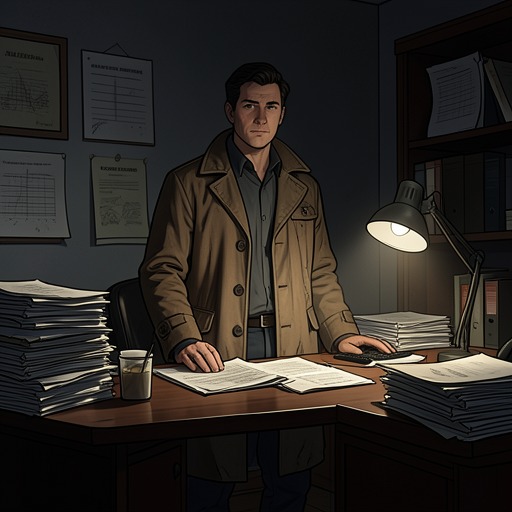
Great Benefit refuses to pay Donny Ray Black’s treatment claim
The RainmakerGreat Benefit Life Insurance Company’s refusal to pay Donny Ray Black’s treatment claim turned a family’s effort to secure a covered bone marrow transplant into a test of the insurer’s claims practices. As the denial letters accumulated and evidence emerged at trial, Rudy Baylor’s case connected Donny Ray’s medical records to a broader 1991 policy of rejecting claims, exposing how the company’s procedures could keep payment out of reach even when a claim was legitimate.
The claim and its stakes
Dot Black had bought an inexpensive family policy, with premiums collected through regular visits from agent Bobby Ott. When Donny Ray needed a bone marrow transplant for acute leukemia, she contacted Great Benefit Life Insurance Company repeatedly, sought help from public officials and local hospitals, and organized friends and neighbors to raise money. None of these efforts secured the treatment. Donny Ray’s medical records indicated that chemotherapy had not ended the danger: the leukemia was expected to return, and his doctor reported that the illness would ultimately be fatal without a transplant.
The policy’s wording became central to the dispute. Great Benefit Life Insurance Company’s defense later argued that the policy did not cover bone marrow transplants, but the policy listed exclusions for other transplantable organs and did not name bone marrow. The revised policy Rudy Baylor obtained included explicit language excluding bone marrow transplants. That contrast gave the dispute a precise documentary focus: the company’s position at trial depended on an exclusion absent from the policy the Black family had bought.
Denials and delay
The Black claim was met not with one stable explanation but with a succession of denials. Dot Black read seven letters to the jury: some denied the claim outright, while others deferred it between claims and underwriting. The stated grounds shifted, including a preexisting-condition rationale, Donny Ray’s status as an adult who was not a household member, and assertions that bone marrow transplantation was not covered or was too experimental. The sequence left the family facing repeated obstacles while the treatment remained unpaid.
Earlier, Max Leuberg had described debit insurance as low-cost coverage sold to people with limited resources, with premiums collected in small recurring payments. He warned Rudy Baylor that insurers knew many policyholders were afraid of lawyers and that only a small proportion of bad-faith denials reached court. In his account, the financial incentive was stark: a company might deny a valid claim, pay a comparatively small amount when challenged, and still retain savings from the many policyholders who never sued. That explanation framed the Black case as part of a structural problem, though the specific evidence of Great Benefit Life Insurance Company’s own practices emerged later.
Evidence of a company policy
Jackie Lemancyzk testified that, beginning January 1, 1991, Great Benefit Life Insurance Company adopted a year-long experiment of initially denying every claim over $1,000, regardless of its merits. Some smaller claims were eventually paid, but larger claims were generally not paid unless an insured person hired a lawyer and pressed the matter. Lemancyzk said management regarded the experiment as successful and estimated that it produced about $40 million in additional gains. Her account transformed the Black family’s string of explanations from a collection of isolated decisions into evidence of an organized claims-denial policy.
Lemancyzk also described how the Black claim received special scrutiny once the company noticed the diagnosis of acute leukemia. Her account was that the company understood the transplant exclusion was missing, knew from the medical records that Donny Ray was terminally ill without treatment, and nevertheless continued the denial. She explained that the company was counting on the odds that policyholders would not consult a lawyer. According to her testimony, a lawyer’s involvement changed the company’s response: smaller legitimate claims might be paid, while larger ones could move to supervisors or be resolved through confidential settlements.
The paperwork helped explain how delay could be maintained inside the company. Great Benefit Life Insurance Company’s claims and underwriting departments passed files and instructions between them, with denial and further-review notices going to policyholders while the departments exchanged memos. Cooper Jackson described the procedure as post-claim underwriting; Rudy Baylor recognized parts of it in the documents already obtained through discovery. The manuals Jackson showed him contained matching Section U provisions, including material absent from Rudy’s copy. When executive Kermit Aldy testified, he first characterized Section U as a system of checks and balances. Rudy then produced the complete manual, and the missing section exposed the instructions linking the two departments’ handling of claims.
From private loss to courtroom proof
At trial, Dot Black’s testimony gave the documentary sequence a human context. She described her efforts to obtain care for her son, identified the policy and application, and read the denial letters aloud. The most damaging letter was read twice at Rudy Baylor’s request. The jury’s attention to the letters made the company’s shifting reasons part of the evidence rather than a dispute described only by counsel. Great Benefit Life Insurance Company’s defense maintained that the transplant was outside the policy and medically uncertain, but the policy’s omission of bone marrow and the medical testimony supporting the procedure undercut that account.
The trial also presented Donny Ray himself through a 31-minute edited recording of his deposition. The jury watched in silence, while Dot Black sat beside Rudy Baylor. The recording made the consequences of the unpaid claim immediate to the case: the legal dispute concerned not only what the policy covered, but treatment Donny Ray had needed and did not receive. Rudy Baylor later argued that the defense had offered no evidence contrary to Dr. Walter Kord’s testimony that transplantation was not experimental and quite probably would have saved Donny Ray’s life.
Consequences and significance
Rudy Baylor’s closing argument brought together the policy language, the denial record, Lemancyzk’s account, and Great Benefit Life Insurance Company’s financial figures. He argued that the jury should judge the company’s conduct against its resources, while the defense offered a $200,000 framing of the dispute around the cost of the transplant and the Black family’s modest income. In rebuttal, Rudy challenged the timing of that offer, pointing out that the company had not made the same concession when the trial began. The jurors then left to deliberate; the evidence here establishes the case’s presentation and the start of deliberations, not their result.
The refusal therefore carried two connected meanings in the story. For the Black family, it was a concrete failure to fund treatment that Donny Ray’s doctors considered necessary. For the jury, the claim became a way to examine whether repeated denials, internal procedures, and the expectation that poor policyholders would give up formed a profitable corporate strategy. The case’s force came from the collision between an ambiguous policy clause and a detailed record of how the company acted once the claim arrived.